

Quick answer
- Etsy automated takedowns are AI-driven sweeps that scan listings for trademark and copyright infringement without manual human review.
- Etsy bots analyze both text (titles, tags, descriptions) and visual elements (images, logos, shapes) to find intellectual property violations.
- Brands use the Etsy Reporting Portal to upload their IP, which can trigger massive automated sweeps across millions of listings overnight.
- Sellers can protect themselves by auditing tags, removing branded staging props from mockups, and using proactive scanning tools before publishing.
What Are Etsy Bot Sweeps?
An introduction to how Etsy uses AI to police its massive marketplace.
Etsy automated takedowns are AI-driven enforcement actions where bots scan millions of listings to detect and remove intellectual property (IP) infringement. Because manual human review of over 100 million active listings is impossible, Etsy relies heavily on machine learning algorithms to police the marketplace and maintain its safe harbor status.
When a seller's listing is suddenly deactivated with a generic trademark or copyright infringement email, it is rarely the result of an Etsy employee looking at the shop. Instead, an automated bot sweep has flagged a specific keyword, tag, or visual element. These bots operate continuously in the background, but they also execute massive, targeted sweeps when a major brand registers their IP with the platform.
Understanding how these bots operate is the first step to protecting your shop. While the AI is highly efficient at removing blatant counterfeit goods, it lacks human nuance, frequently catching innocent sellers in the crossfire over minor technicalities.
The Anatomy of an Automated Takedown
Understanding how a listing goes from active to deactivated in seconds.
- Brand Registration Brands provide Etsy with exact text and visual assets to monitor.
- AI Bot Sweeping The bot checks titles, tags, and images for matches to the registered IP.
- Instant Deactivation No human reviews the context; the takedown is entirely automatic.
- Account Strike A hidden strike is applied to the shop, risking future suspension.
Text vs. Image Recognition: How the Bots "See"
Explaining the difference between keyword scanning and visual AI scanning.
Historically, Etsy's bots primarily scanned text. They would crawl your titles, descriptions, and all 13 tags looking for exact matches to trademarked phrases. If a match was found for a protected term like "Smiley" or "Onesie," the listing was instantly deactivated.
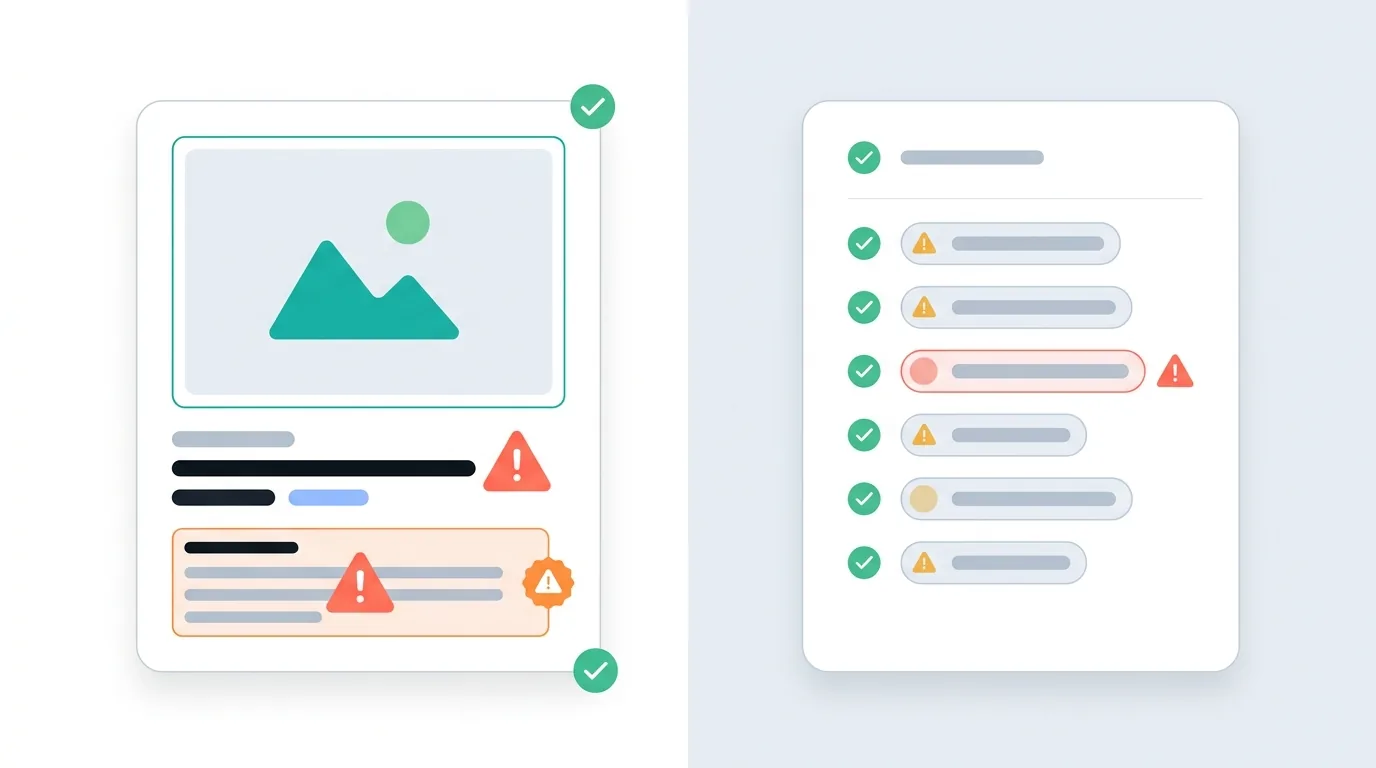
Today, the technology is much more advanced. Etsy now utilizes sophisticated image recognition AI to scan your actual listing photos. This means the bot isn't just reading your tags; it is "looking" at your staging, product designs, and mockups to identify protected visual assets.
For example, if you use a trademarked pattern in your digital download, or if you stage your handmade jewelry next to a recognizable designer perfume bottle, the visual AI can flag the listing. Sellers often waste hours rewriting their titles, completely unaware that the bot actually flagged a protected shape or logo hidden within their image gallery.
The Etsy Reporting Portal Trigger
How brands initiate mass takedowns using Etsy's internal tools.
Automated takedowns don't just happen randomly; they are often triggered directly by the Etsy Reporting Portal. This portal allows registered brands and intellectual property owners to upload their trademarks and copyrights into Etsy's system securely.
Once a brand submits their IP, they can use Etsy's internal tools to search for infringing listings and issue mass takedowns with just a few clicks. When a major brand decides to "clean up" the marketplace or enforce a newly acquired trademark, they initiate a wave of automated bot sweeps that can deactivate thousands of listings overnight.
This explains a massive source of seller frustration: why a listing that has been active and generating sales for three years can suddenly be taken down without warning. The listing itself didn't change, but the brand's enforcement strategy did.
Common Innocent Mistakes That Trigger Takedowns
Highlighting the accidental ways sellers get caught in bot sweeps.
Many sellers trigger Etsy automated takedowns without ever intending to steal intellectual property. One of the most common mistakes is blind tag copying. When sellers use SEO tools to copy tags from best-selling competitors, they often unknowingly import hidden trademarked phrases that the bot is actively hunting.
Another frequent error involves staging props. A seller might create a completely original, non-infringing product, but photograph it next to a branded item to make the lifestyle mockup look premium. The image recognition bot detects the brand's logo in the background and automatically issues a strike.
Finally, improper "compatible with" phrasing frequently triggers bots. While nominative fair use allows you to state that your accessory fits a specific brand's device, phrasing it incorrectly in your tags looks identical to infringement to an AI bot. Always consult a qualified attorney to ensure your phrasing meets legal fair use standards.
3 Innocent Mistakes That Trigger Bots
Avoid these common errors that signal infringement to Etsy's AI.
Placing a designer bag or branded electronics in your lifestyle mockup triggers visual AI bots.
Importing a competitor's tags often brings hidden trademarked phrases into your listing.
Relisting a deactivated item with minor tweaks signals repeat infringement to the bot.
What to Do If the Bot Flags Your Listing
Actionable steps to take after receiving a takedown notice.
If you receive an automated takedown notice, your first reaction might be to panic or immediately try to fix and relist the item. Do not relist the deactivated item. Relisting a flagged item without completely resolving the underlying IP issue is a severe policy violation that can trigger an immediate, permanent shop suspension.
Instead, carefully review the email Etsy sent. It will typically identify the complaining party and the specific intellectual property at issue. Use the USPTO database to research the trademark and determine exactly where your listing violated the rule.
If you believe the takedown was a genuine error—such as the bot misidentifying an original design—you may have the option to file a DMCA counter-notice for copyright claims. However, trademark takedowns do not have a standard counter-notice process on Etsy, often requiring you to contact the brand directly to retract the strike. Consult a qualified attorney if you are unsure how to proceed with a legal counter-notice.
How to Protect Your Shop from Automated Takedowns
Proactive strategies to avoid bot detection.
The only way to survive in an era of AI enforcement is to adopt proactive AI defense. You must audit your listings before the bots do. This means manually checking every new phrase, quote, and tag against the USPTO database before hitting publish.
For visual protection, you must scrutinize your mockups and product designs. Ensure no accidental logos, protected patterns, or trademarked characters appear anywhere in your image gallery, even in the blurred background.
Because manual checking is incredibly time-consuming, many high-volume sellers use automated scanning tools. By running your shop through a specialized IP scanner, you can detect risky text and visual elements in seconds, allowing you to fix the issues before Etsy's bots ever see them.
Pre-Publish Bot Defense Checklist
Run through these steps before publishing to keep your listings safe.
Ensure no single word or phrase is a registered trademark for your product class.
Verify that lifestyle photos contain no protected shapes or branded props.
Ensure accessory listings clearly state they are "for" a brand, not "by" the brand.
Scan your draft for text and visual IP risks to catch what you missed.
Frequently asked questions
Does Etsy use AI to scan listings for copyright?
Yes, Etsy uses automated bots and advanced image recognition AI to scan listings for potential copyright and trademark infringement, which often results in automated takedowns without human review.
Why was my Etsy listing deactivated without warning?
Listings are typically deactivated without warning because an automated bot sweep detected a trademarked phrase in your tags or a protected visual element in your images, triggering an immediate removal.
Can I relist an item after an Etsy bot takedown?
No. Relisting an item that was deactivated for IP infringement without fully resolving the underlying legal issue is a severe policy violation that can lead to immediate and permanent shop suspension.
Stop Fearing the Bot Sweeps
Don't leave your shop's fate up to an automated algorithm. ZenStorefront uses advanced AI to scan your listings, tags, and images for hidden trademark and copyright risks before you publish. Catch the mistakes the bots are looking for and sell with confidence.
Start a free scanSources reviewed
- DMCA Notice Requirements - Our House Rules - Official policy on how Etsy handles automated takedowns and DMCA counter-notices.
- Intellectual Property Policy - Etsy's official stance on IP enforcement and seller responsibilities.
- Etsy Reporting Portal - The official tool brands use to trigger automated sweeps on the marketplace.