

Quick answer
- Brand protection agencies like Corsearch and Red Points are third-party companies hired by major brands to enforce intellectual property rights on marketplaces like Etsy.
- These agencies use AI bots to scrape listings for trademarked keywords and use optical character recognition (OCR) to detect logos in images.
- Because the AI lacks context, it frequently issues false positive takedowns against legitimate vintage sellers and nominative fair use listings.
- To resolve a false copyright strike, sellers can file a DMCA counter-notice; for a trademark strike, sellers must email the agency to request a retraction.
What Are Brand Protection Agencies?
Explaining the role of third-party IP enforcement companies on Etsy.
If you recently received an email from Etsy stating your listing was deactivated due to a report from a company you don't recognize, you are likely experiencing an Etsy brand protection agency takedown. Brand protection agencies are specialized tech companies hired by major corporations to police their intellectual property online. Well-known examples include Corsearch, Red Points, Incopro, and Yellow Brand Protection.
When a massive brand like Harley Davidson, Warner Bros, or Chanel wants to clear unauthorized merchandise from platforms like Etsy, Amazon, or eBay, they rarely do it themselves. Instead, they outsource the job to these agencies. The agencies are granted legal authorization to act as the brand's representative, allowing them to submit mass takedown notices directly through the Etsy Reporting Portal.
Instead of employing human lawyers to review individual listings, these agencies use enterprise-level software to automate the discovery and reporting process. Because their business model relies on volume and efficiency, they are highly aggressive. They are incentivized to remove as many potential infringements as possible, which often leads to a 'shoot first, ask questions later' approach to marketplace enforcement.
How AI Bots Find Your Etsy Listings
The technology behind automated marketplace sweeps.
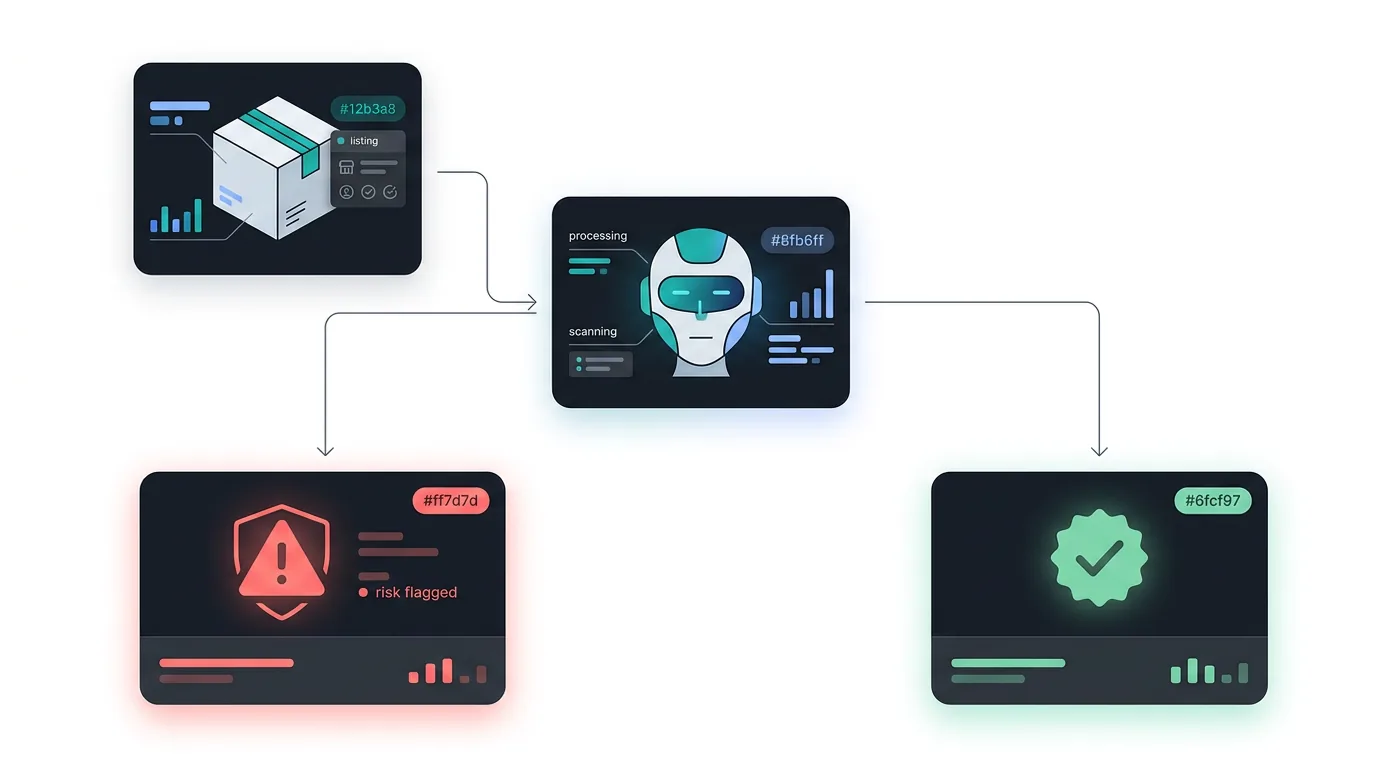
Brand protection agencies do not browse Etsy like normal customers. They use automated web scrapers and artificial intelligence to analyze thousands of listings per minute. The most common method is keyword scraping. The AI scans your titles, descriptions, and backend tags for specific trademarked terms. Even if a protected word is buried deep in your 13th tag, the bot will find it instantly.
Beyond text, these agencies utilize advanced visual recognition software. Using Optical Character Recognition (OCR) and logo detection algorithms, the AI analyzes your product photos. If you have a branded logo on a vintage shirt, or a trademarked phrase printed on a mug, the software can 'read' the image and flag it as a violation without human intervention.
Once the software compiles a list of suspected infringements, it can automatically generate and submit bulk IP reports to Etsy. In many cases, a human analyst never even looks at your listing or its context before the strike is issued.
How AI Bots Sweep Etsy
The automated workflow brand protection agencies use to issue mass takedowns.
- Keyword Scraping The AI scans your titles, descriptions, and all 13 tags for specific brand names.
- Visual Recognition The software uses OCR to read text and detect logos directly in your product photos.
- Automated Enforcement The system generates bulk infringement reports and submits them directly to the Etsy portal.
The "False Positive" Problem on Etsy
Why legitimate sellers get caught in the crossfire of AI sweeps.
The biggest flaw with brand protection AI is that it lacks context. A bot cannot tell the difference between a malicious counterfeit and a legally protected listing. This results in a massive wave of false positive takedowns that harm innocent Etsy sellers and disrupt their income.
For example, sellers of authentic vintage clothing frequently receive strikes from agencies like Corsearch. Under the First Sale Doctrine, reselling a legally purchased, unaltered vintage item is perfectly legal. However, the AI only sees a branded logo and issues a counterfeit strike. Similarly, sellers using 'nominative fair use' to describe accessories—such as a watch band 'compatible with Apple Watch'—are often wrongly targeted by bots sweeping for the brand name.
These false positives are incredibly frustrating because Etsy's policy is to stay out of intellectual property disputes. Etsy will not evaluate your evidence or reverse the strike on their own; they simply process the agency's automated report and wait for the two parties to resolve it.
Common Triggers for False Positives
Why legitimate listings get flagged by AI.
Bots flag real vintage items, ignoring the First Sale Doctrine that protects resellers.
Bots ignore nominative fair use context in titles for accessories and replacement parts.
Bots flag common names and words regardless of the actual product context.
What to Do If You Get an Agency Takedown
Steps to handle a strike from Corsearch, Red Points, or similar agencies.
If your listing is deactivated by a brand protection agency, do not panic and do not immediately delete the inactive listing. First, read the email from Etsy carefully to determine if the strike is for copyright (DMCA) or trademark infringement. The response process is entirely different for each type of claim.
If the agency filed a DMCA copyright claim and you are certain it is a false positive (for instance, you created the artwork entirely from scratch), you can file a formal DMCA counter-notice through Etsy. If the agency does not initiate legal action within 10 business days, Etsy will restore your listing automatically.
If the strike is for trademark infringement, there is no counter-notice option on Etsy. You must contact the agency directly using the email provided in the takedown notice. Keep your message professional and concise. Explain why the listing is legal—such as providing proof of vintage authenticity—and request a formal retraction. If the agency realizes their bot made a mistake, they can email Etsy to withdraw the strike.
How to Respond to an Agency Takedown
Your next steps depend entirely on the type of IP strike.
How to Protect Your Shop Before the Bots Strike
Using proactive software to audit your shop for IP risk.
Relying on manual checks to protect your shop is no longer enough. If billion-dollar brands are using AI to scan your listings, you need to use technology to defend yourself. The best way to survive brand protection sweeps is to ensure your listings are clean before the bots ever arrive.
This means auditing your entire shop for hidden trademarked tags, risky phrases in your descriptions, and logos in your product photography. Because brand protection agencies update their search parameters constantly, what was safe to sell last year might trigger an automated takedown today.
By using a dedicated scanning tool like ZenStorefront, you can level the playing field. Our Image Lab and text scanners allow you to find and remove problematic keywords and visuals before an agency's bot flags them, keeping your shop safe from unexpected suspensions.
Level the Playing Field
Protect your shop with ZenStorefront's proactive scanning.
Find hidden trademarked words in your listings.
Identify logos and copyrighted visuals before publishing.
Frequently asked questions
What is Corsearch on Etsy?
Corsearch is a third-party brand protection agency hired by major corporations to find and remove intellectual property infringements on platforms like Etsy using automated AI software.
Can a third-party agency issue an Etsy takedown?
Yes. Major brands provide these agencies with legal authorization to act on their behalf, allowing them to submit mass takedown notices directly through the Etsy Reporting Portal.
How do I fight a false Red Points trademark strike?
Because Etsy does not offer a counter-notice process for trademark strikes, you must contact the Red Points representative directly via the email provided in your takedown notice to request a formal retraction.
Scan Your Shop Before the Bots Do
Don't wait for a brand protection agency to find a risky tag or image. Connect your shop to ZenStorefront today and let our software identify trademark and copyright risks before they turn into takedowns.
Start a free scanSources reviewed
- Intellectual Property Policy - Our House Rules - Official policy on how Etsy processes third-party infringement reports and counter-notices.
- Online Marketplaces Lead the Way in Protecting Shoppers From Counterfeits - Industry report detailing how brand protection agencies monitor online marketplaces.