
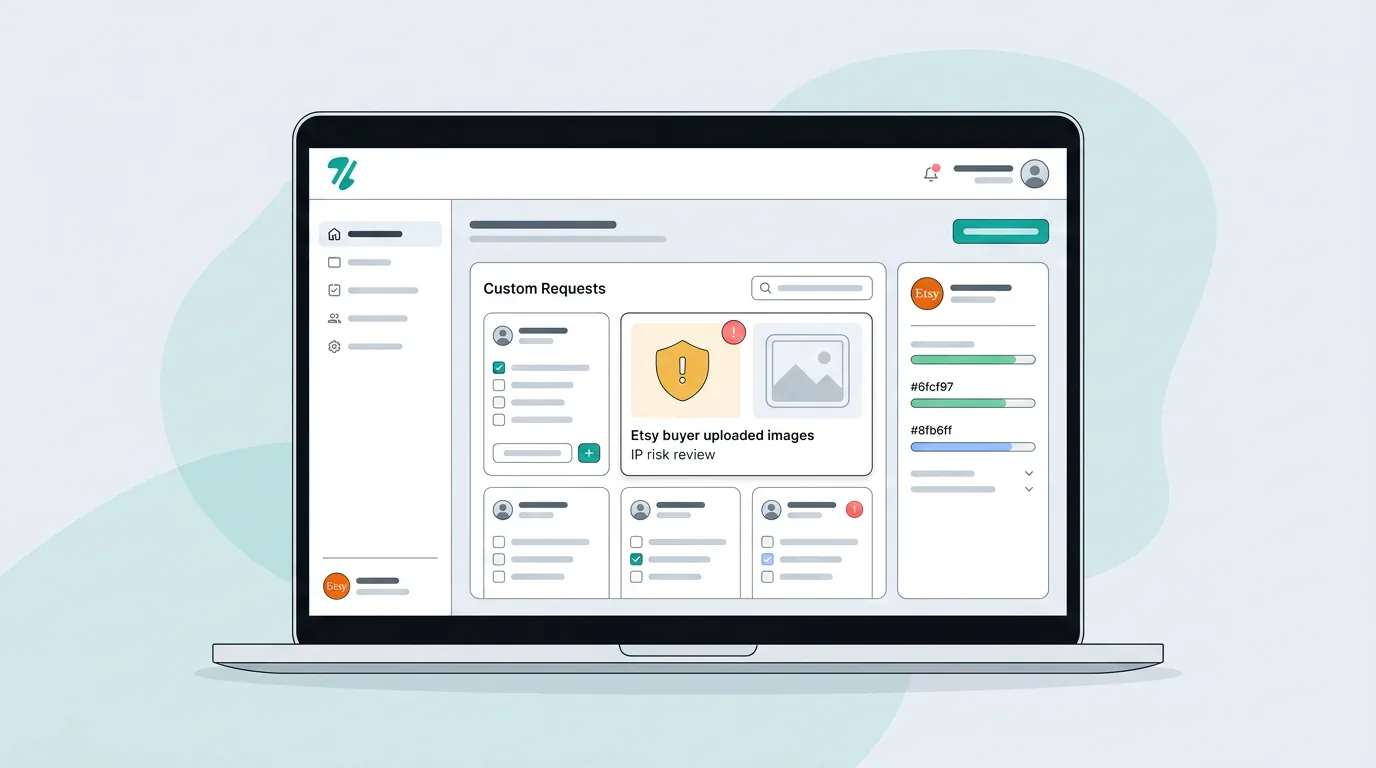
Quick answer
- Sellers are legally liable for intellectual property infringement even if the buyer provides the image.
- Printing a trademarked logo or copyrighted character for a custom order violates Etsy's IP policy.
- Sellers should immediately cancel and refund orders that request the unauthorized printing of protected material.
- Using photos of finished custom orders that feature protected logos in your listing gallery can trigger automated bot takedowns.
The "Buyer Provided It" Liability Myth
Explaining why sellers are legally responsible for the items they print, regardless of who supplied the image.
Many print-on-demand and personalized gift sellers fall into a dangerous trap. They assume that because a customer uploaded a file for a private, one-off custom order, the transaction falls under a "personal use" exception.
This is entirely false. When you accept money to manufacture and ship a product, you are engaging in commercial activity. If that product features a protected asset—like a sports team logo or a cartoon character—you are committing trademark or copyright infringement.
The brand owner will not sue the buyer for requesting the item; they will issue a takedown notice against your Etsy shop for producing and selling it. On Etsy, the seller assumes full liability for commercializing intellectual property.
Common Myths About Custom Orders
The buyer may use the item personally, but your act of manufacturing and selling it is a commercial transaction.
As the manufacturer and seller, you are legally responsible for the items you produce and list on Etsy.
The '30% rule' is a myth. If the original IP is recognizable, it is still considered infringement.
How Custom Orders Trigger Etsy IP Strikes
How private custom orders get discovered by brands and automated bot sweeps.
You might wonder how a brand discovers a private custom order when the direct messages between you and the buyer are confidential. While the communication is private, the resulting listing and shop metadata often are not.
Sellers frequently trigger automated bot sweeps by optimizing their listing titles and tags. If you add tags like "Custom NFL Tumbler" or "Disney Family Vacation Shirt" to attract buyers who want these specific custom items, Etsy's automated systems or brand protection agencies will flag the listing immediately.
Additionally, sellers often use photos of completed custom orders as their primary listing images to show off their portfolio of work. If that photo features a protected logo, image recognition software can easily detect the infringement.
Evaluating Etsy Buyer Uploaded Images
How to assess the risk level of files provided by customers.
Not all Etsy buyer uploaded images carry the same level of risk. As a shop owner, you must train yourself to quickly identify problematic files before accepting and processing an order.
If a customer sends a photo of their own dog, a hand-drawn family crest, or a generic text phrase, you are generally safe to proceed. However, if they upload a file downloaded from Google Images, a famous internet meme, or a recognizable corporate logo, you must pause the transaction.
Even if a buyer claims they purchased a "commercial license" for a design on another platform, you cannot verify the legitimacy of that license or transfer it to your business. If the design features known pop culture elements, rejecting the order is the safest business decision.
Assessing Buyer Upload Risks
Photos taken by the buyer of their family, pets, or original artwork.
Requires explicit written permission from the business owner before printing.
Never print Disney, NFL, or famous characters, even if the buyer requests it.
How to Professionally Decline Infringing Requests
Best practices for canceling orders without upsetting the customer.
Turning down a paying customer is difficult, especially when you are trying to grow your shop's revenue. However, risking a permanent Etsy suspension for a $25 custom shirt is never worth the short-term profit.
When rejecting an order, keep your communication professional, policy-focused, and helpful. Do not accuse the buyer of stealing art; simply explain that your shop policies and Etsy's terms of service strictly prohibit the unauthorized printing of protected intellectual property.
Whenever possible, attempt to pivot the sale. Offer to print a generic alternative, use a different font, or ask if they have an original design you can use instead.
Workflow for Declining Infringing Orders
- Step 1: Identify the IP Check the provided image for known characters, logos, or watermarks.
- Step 2: Cancel & Refund Do not process the order. Issue a full refund immediately to avoid shipping delays.
- Step 3: Send a Policy Message Politely inform the buyer that Etsy policy prohibits printing trademarked material.
- Step 4: Offer an Alternative Suggest a generic design or ask for an original, non-copyrighted image.
Listing Image Rules for Finished Custom Work
Etsy's policies on using photos of completed custom orders in your shop.
Etsy's policies require sellers to use original photos of the actual product buyers will receive. For customized items, your first image must feature a finished example of your work to help buyers visualize the final product.
If you plan to use a previous buyer's custom order as your listing photo, Etsy requires you to obtain the buyer's permission first. More importantly, that finished product cannot contain any infringing intellectual property.
If you printed a local business's logo (with their explicit permission) and want to use it as a mockup, ensure you have written consent to use their branding in your marketing. Otherwise, stick to displaying generic custom examples, like a monogram or a simple text phrase.
Protecting Your Shop from Custom Order Risks
Proactive steps to audit your shop and prevent future IP strikes.
Managing custom requests requires constant vigilance. A single mistake—like leaving an old listing active that features a trademarked custom request in the photo gallery—can result in a devastating shop penalty months after the order was completed.
Regularly auditing your listing images, titles, and tags is the best way to ensure compliance. Remove any portfolio photos showing protected logos, and ensure your "Custom Order" listing descriptions explicitly state that you will not print copyrighted material.
By setting clear boundaries upfront, you train your customers on what is acceptable, reducing the number of infringing requests you have to manage.
Scan Your Custom Listing Photos
Ensure your portfolio images don't contain hidden trademark risks.
Scan your existing listing photos to ensure no past custom orders are displaying protected logos.
Frequently asked questions
Can I print a trademarked logo if the customer says it's for personal use?
No. While the customer's use may be personal, your act of manufacturing and selling the item is a commercial transaction, which constitutes infringement.
What should I do if a buyer uploads a Disney character for a custom shirt?
You should cancel and refund the order immediately. Send a polite message explaining that Etsy's policies prohibit the unauthorized printing of copyrighted material.
Can I use a customer's custom order photo in my listing?
Yes, but only if you have the buyer's permission and the finished product does not contain any infringing intellectual property or trademarked logos.
Audit Your Custom Listing Photos Today
Don't let an old portfolio photo of a custom order trigger a shop suspension. Use ZenStorefront to scan your listing images and metadata for hidden trademark risks before the bots find them.
Start a free scan