
Quick answer
- An Etsy dupe trademark strike occurs when a seller lists an item that imitates a luxury brand's protected design or uses their brand name in the listing.
- Under US trademark law, labeling a product as a 'dupe,' 'faux,' or 'inspired by' does not prevent consumer confusion and is still considered trademark infringement.
- Luxury brands actively sweep Etsy to issue takedowns for unauthorized use of their brand names in tags, or for copying protected trade dress, such as the Van Cleef & Arpels quatrefoil clover shape.
The "Dupe Culture" Myth on Etsy
Explaining why transparency about an item being a replica does not protect sellers from trademark infringement.
If you are dealing with an Etsy dupe trademark strike, you are likely caught in the crosshairs of aggressive luxury brand protection. Social media has popularized "dupe culture," leading many Etsy sellers to create affordable alternatives to high-end designer jewelry, bags, and apparel. However, selling dupes on Etsy carries massive intellectual property risks.
An Etsy dupe trademark strike happens when a seller uses a protected brand name, logo, or signature product shape without permission. Many sellers mistakenly believe that labeling an item as a "dupe," "faux," or "inspired by" provides legal cover because it is transparent with the buyer. Under trademark law, this does not prevent consumer confusion or brand dilution.
In trademark law, a brand's identity is protected from unauthorized use. By using a luxury brand's cultural cachet to sell your own product, you are trading on their established goodwill. When luxury brands find these listings, they issue immediate takedowns, regardless of how transparent your description might be.
Common Myths About Selling Dupes on Etsy
Trademark law protects against trading on a brand's reputation. Admitting it's a copy doesn't negate the infringement.
Using a trademarked brand name in your title or tags to drive traffic is a direct violation, regardless of modifiers.
Product shapes, patterns, and specific color combinations can be protected as Trade Dress.
The Keyword Trap: Why "Inspired By" Fails to Prevent an Etsy Dupe Trademark Strike
Detailing how automated bots flag listings that use designer names in tags and titles.
One of the most common ways sellers receive an Etsy luxury brand takedown is through their SEO strategy. To capture search traffic, sellers frequently use the actual designer's name in their titles, tags, or descriptions, often paired with modifiers like "inspired by" or "style."
Brand protection agencies use automated software bots to scrape Etsy for these exact keywords. These bots do not read your listing for nuance or context. If your tags contain a protected brand name, the bot flags it, and the brand issues a takedown notice through Etsy's reporting portal.
Etsy processes these trademark complaints rapidly to maintain their safe harbor status and avoid liability. To keep your shop safe, you must completely eliminate luxury brand names from your metadata. If you need help identifying risky terms across your entire inventory, you can use ZenStorefront's overview dashboard to scan your listings for hidden trademark traps.
The Trade Dress Trap: The Van Cleef Clover and Protected Shapes
Explaining trade dress and how product shapes, like the Van Cleef clover, are protected.
Many sellers believe they are safe as long as they avoid using the designer's name or logo. However, intellectual property law also protects the physical design and shape of a product, known as trade dress or a design mark.
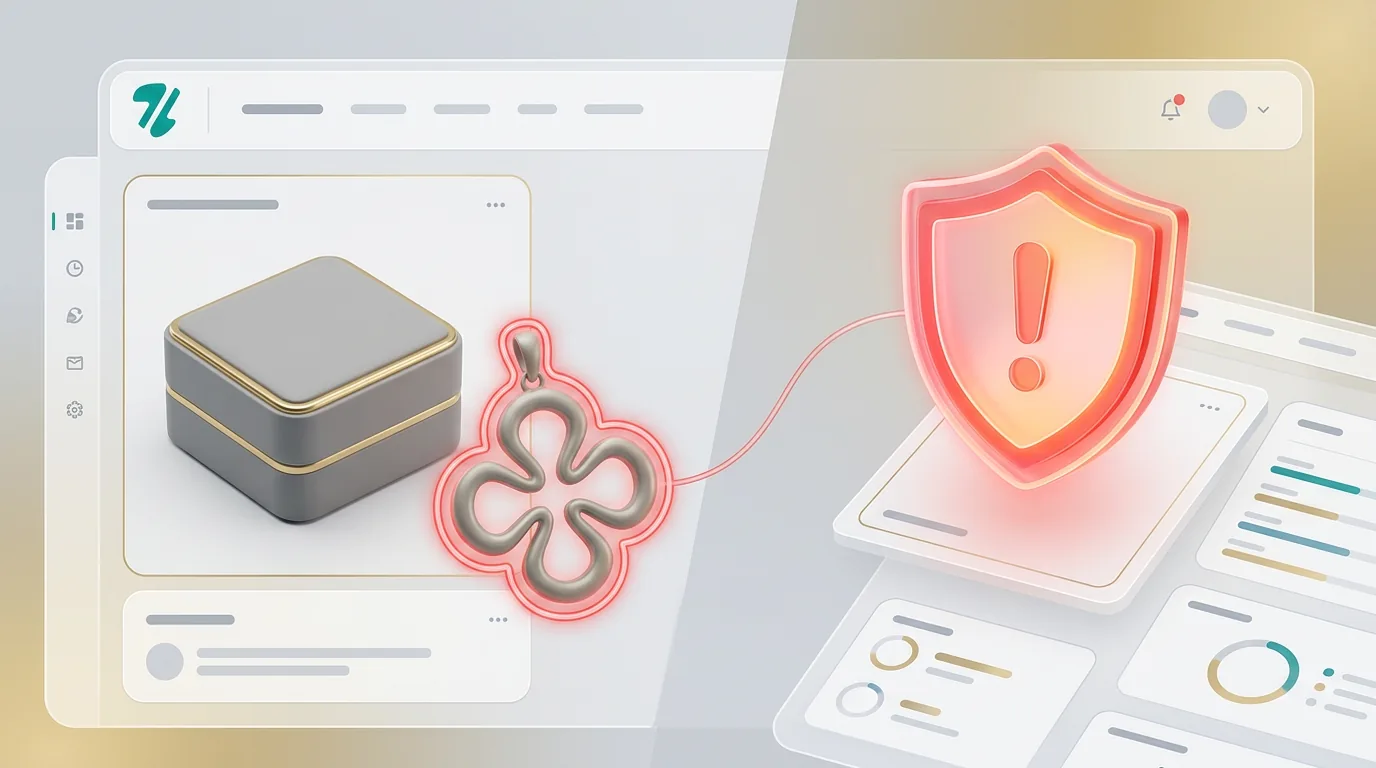
A prime example is the Van Cleef trademark on Etsy. Van Cleef & Arpels holds a strict registered trademark for their signature quatrefoil design—a specific four-leaf clover shape with a beaded outer edge and a flat inner portion. Even if you list the item simply as a "lucky clover necklace" and never mention the brand, the exact shape itself is protected.
Selling designer inspired jewelry on Etsy requires a deep understanding of which shapes are generic and which are proprietary. If your product perfectly mimics a famous silhouette, such as a specific woven leather pattern or a distinct screw-head bangle, you are at high risk for a strike. You can leverage tools to analyze your product photos for high-risk shapes before you publish.
High-Risk Luxury Elements on Etsy
The specific four-leaf clover shape with beaded edges is a registered trademark of Van Cleef & Arpels.
Bracelets featuring the distinct screw-head design are heavily protected by Cartier.
Specific intrecciato woven leather styles can trigger takedowns from brands like Bottega Veneta.
The Threat of Schedule A Lawsuits for Designer Dupes
Highlighting the severe financial risks of Schedule A lawsuits initiated by luxury brands.
Receiving a standard listing deactivation is frustrating, but luxury brands are increasingly utilizing a much more aggressive legal tactic: Schedule A lawsuits. Also known as the SAD Scheme, these lawsuits are filed in federal court against hundreds of anonymous online sellers at once.
Instead of sending a simple cease-and-desist letter, the brand's legal team secures a temporary restraining order. This order forces platforms like Etsy and payment processors like PayPal to immediately freeze the seller's funds and shut down their storefront without prior warning.
Brands like Dior, Chanel, and Cartier have vast legal budgets dedicated to anti-counterfeiting. Once your funds are frozen in a Schedule A lawsuit, it can take months and thousands of dollars in legal fees to negotiate a settlement and regain access to your money.
How to Sell Trending Aesthetics Safely
Actionable advice on pivoting from dupes to generic, descriptive SEO.
You do not have to abandon trending aesthetics entirely; you just need to pivot your approach. The key is to sell the general style without copying the proprietary elements that define the luxury brand.
Focus on descriptive, generic SEO. Instead of using designer names, describe the actual physical attributes of the item. Use terms like "minimalist leather crossbody," "chunky gold hoops," or "geometric pendant." This targets buyers looking for a specific vibe without triggering brand protection bots.
Finally, conduct a thorough audit of your shop. Review all active, inactive, and sold-out listings to ensure no lingering designer names or high-risk shapes are present. By properly connecting your account to a compliance tool, you can automate this process and ensure your shop remains compliant while still capturing eager buyers.
How to Audit Your Shop for Luxury IP Risk
- Purge Brand Names Search your titles, tags, and descriptions for any luxury designer names, including common misspellings.
- Remove "Dupe" Keywords Delete terms like "dupe," "replica," or "faux designer" from your SEO strategy entirely.
- Check Product Shapes Ensure your jewelry or apparel doesn't perfectly mimic a brand's protected trade dress or signature silhouette.
- Scan with ZenStorefront Run your listings through ZenStorefront to automatically detect high-risk shapes and trademarked terms.
Frequently asked questions
Is it legal to sell dupes on Etsy if I don't use the brand name?
It depends on the product. If the dupe copies a protected product shape or design (known as trade dress), it is still considered trademark infringement even if you never use the brand's name or logo.
Can I use the phrase 'inspired by' on Etsy?
No. Using a trademarked brand name in your listing, even if preceded by 'inspired by,' is considered trademark infringement and can trigger an immediate takedown from the brand owner.
Why did my Van Cleef clover necklace get taken down on Etsy?
Van Cleef & Arpels owns a registered trademark for their specific quatrefoil design (a four-leaf clover with beaded edges). Selling items with this exact shape violates their trade dress, regardless of what you call it in the listing.
Stop Guessing About Designer IP Risks
Worried that your jewelry or apparel listings might trigger a luxury brand takedown? ZenStorefront scans your titles, tags, and product images for protected brand names and high-risk shapes, keeping your shop safe from unexpected strikes.
Start a free scan