
Quick answer
- An Etsy policy violation is an internal marketplace action where Etsy removes a listing for breaking its House Rules, such as the Handmade Policy or Prohibited Items list.
- An intellectual property (IP) infringement is an external legal complaint filed by a brand or creator, forcing Etsy to remove the listing under laws like the DMCA.
- To appeal a policy violation, sellers must contact Etsy Support with proof of compliance, such as raw material invoices and process photos.
- To appeal an IP strike, sellers must either file a legal DMCA counter-notice for copyright claims or obtain a direct retraction from the trademark owner.
1. What is an Etsy Policy Violation?
Policy violations are internal decisions made by Etsy when a listing breaks their specific marketplace rules.
An Etsy policy violation occurs when your listing breaks the platform's internal House Rules. This is a marketplace-level decision made by Etsy's Trust & Safety team or their automated bots. Etsy sets these rules to maintain the integrity of their marketplace, protect buyers, and ensure the platform remains true to its original vision.
The most common trigger is the Handmade Policy. If Etsy's bots suspect you are reselling mass-produced items or using unauthorized production partners, they will deactivate the listing. Other frequent policy violations include selling Prohibited Items (like certain plants, hazardous materials, or items making medical claims) or failing to follow mature content guidelines.
Because this is an internal issue, Etsy acts as the judge. The complaining party is the platform itself, meaning your resolution path goes directly through Etsy's internal systems rather than external legal channels.
2. What is an IP Infringement Strike?
IP strikes are external legal complaints filed by brands or creators that force Etsy to remove a listing.
An intellectual property (IP) infringement is entirely different: it is an external legal complaint. Etsy does not actively police the internet for copyright or trademark violations. Instead, they are legally required to remove listings when a brand, creator, or authorized legal agent files a formal takedown notice.
These strikes typically fall into three categories: copyright infringement (someone claims you stole their photo or artwork), trademark infringement (you used a protected brand name in your tags or title), or counterfeit claims. Under laws like the Digital Millennium Copyright Act (DMCA), Etsy must act swiftly to remove the content to maintain their 'Safe Harbor' legal protection.
In these cases, Etsy is just the messenger. They are not accusing you of a crime, nor will they judge whether the brand's claim is fair. They are simply complying with federal law to protect their own business.
3. The Core Differences: Etsy Policy Violation vs IP Infringement
Understanding the fundamental differences in who initiates the strike and the potential consequences.
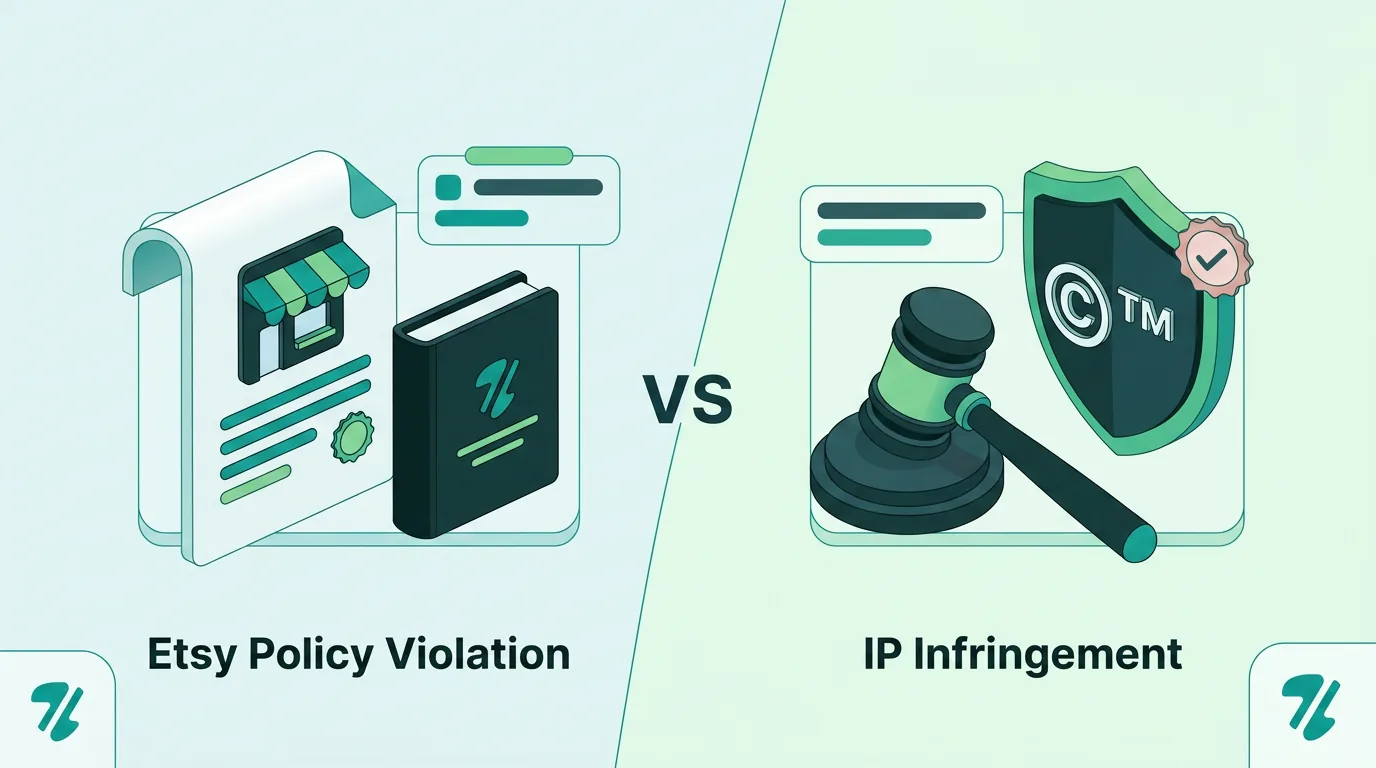
The distinction between an Etsy policy violation vs IP infringement fundamentally changes your risk level and how you must respond. A policy violation threatens your standing with Etsy; an IP strike introduces potential legal liability with an outside corporation.
When a policy violation occurs, Etsy's automated systems have usually flagged your listing based on keywords, category mismatches, or image recognition. You are dealing with platform algorithms. With an IP strike, a human or a brand's anti-piracy software has specifically targeted your shop and submitted a legal document under penalty of perjury.
Accumulating too many of either will result in a permanent shop suspension. However, while Etsy can sometimes be lenient with minor policy misunderstandings, their tolerance for repeat IP infringement is practically zero due to the severe legal risks involved for the platform.
Policy Violation vs. IP Infringement Breakdown
A quick reference guide to understand the mechanics behind your deactivated listing.
4. How to Read Your Deactivation Email
The automated email from Etsy contains the exact clues needed to identify the type of strike.
When a listing is removed, the automated email you receive contains the exact clues you need to determine your next steps. Do not panic and delete the email; read it carefully to identify the type of strike.
If the email states your item was removed for 'not meeting our Handmade Policy' or 'violating our Prohibited Items policy,' you have a policy violation. The email will usually link directly to the specific Etsy House Rule that was triggered.
If the email mentions 'Intellectual Property,' 'DMCA,' or includes the contact information (an email address) of a complaining party, you have received an IP strike. The presence of a third-party email address is the definitive proof that an external brand filed a legal takedown against you.
Common Seller Mistakes When Listings are Deactivated
Avoid these critical errors that can turn a simple deactivation into a permanent shop suspension.
Submitting a legal counter-notice when Etsy flagged you for 'not handmade' will be ignored and wastes valuable time.
Etsy doesn't choose to issue IP strikes; they are legally required to remove listings when a brand files a valid report.
Relisting a deactivated item without fixing the root cause will quickly lead to a permanent shop suspension.
5. The Appeal Workflows: Choosing the Right Path
Policy violations require internal support tickets, while IP strikes require legal counter-notices or retractions.
Because the root causes are different, the appeal processes are completely separate. If you try to use a legal IP workflow for an internal policy violation, your request will be ignored and your listing will remain deactivated.
For a policy violation, you must appeal directly to the platform. Gather concrete evidence that your item complies with their rules—such as raw material invoices, in-progress creation photos, and a clear description of your workflow. Open a ticket to contact Etsy Support and politely request a manual review by a human agent.
For an IP strike, contacting Etsy Support will not help. If it is a copyright claim and you are certain you own the original work, you can file a formal DMCA counter-notice. If it is a trademark strike, your only option is to contact the complaining party directly using the email provided and negotiate a retraction. Always consult a qualified attorney before making legal decisions or filing formal counter-notices.
Choosing Your Next Steps
Select the correct workflow based on the type of email you received from Etsy.
Open a support ticket, attach your material invoices and process photos, and politely request a manual review.
If you are 100% certain you created the original work, submit a formal DMCA counter-notice to restore the listing.
Accept the strike, delete any similar listings immediately, and audit your entire shop for protected terms.
6. Preventing Deactivations Before You Publish
Proactive auditing of your listings is the best defense against both policy and IP takedowns.
The best way to handle listing deactivations is to prevent them from happening in the first place. This requires a proactive approach to both Etsy's internal rules and external IP laws.
Before publishing, audit your tags, titles, and descriptions. Ensure you are not using trademarked terms to describe your items, even with modifiers like 'inspired by.' Additionally, verify that your listing photos don't accidentally include protected logos or violate Etsy's visual guidelines.
Using a dedicated compliance tool like ZenStorefront can streamline this process. By scanning your shop for high-risk keywords and potential policy triggers, you can catch issues before Etsy's bots or a brand's legal team finds them.
Frequently asked questions
Can an Etsy policy violation get my shop suspended?
Yes. While Etsy may be lenient with a single mistaken listing, repeated policy violations—especially attempting to resell mass-produced goods in the handmade category—will result in a permanent shop suspension.
Does Etsy check listings for copyright infringement?
No. Etsy does not proactively scan listings for copyright infringement. They only remove listings when they receive a formal, legally compliant takedown notice from the intellectual property owner or their authorized agent.
How do I know who filed the IP strike against me?
When Etsy deactivates a listing for IP infringement, the automated notification email will include the name and contact email address of the complaining party who filed the legal takedown.
Can I use a DMCA counter-notice for a trademark strike?
No. The DMCA counter-notice process only applies to copyright infringement claims. If you receive a trademark strike, you must contact the brand directly to negotiate a retraction.
Stop Guessing and Start Scanning
Don't wait for a deactivation email to find out if your listings are compliant. Use ZenStorefront to automatically scan your titles, tags, and images for trademark risks and policy triggers before you publish. Protect your shop's standing today.
Start a free scan