
Quick answer
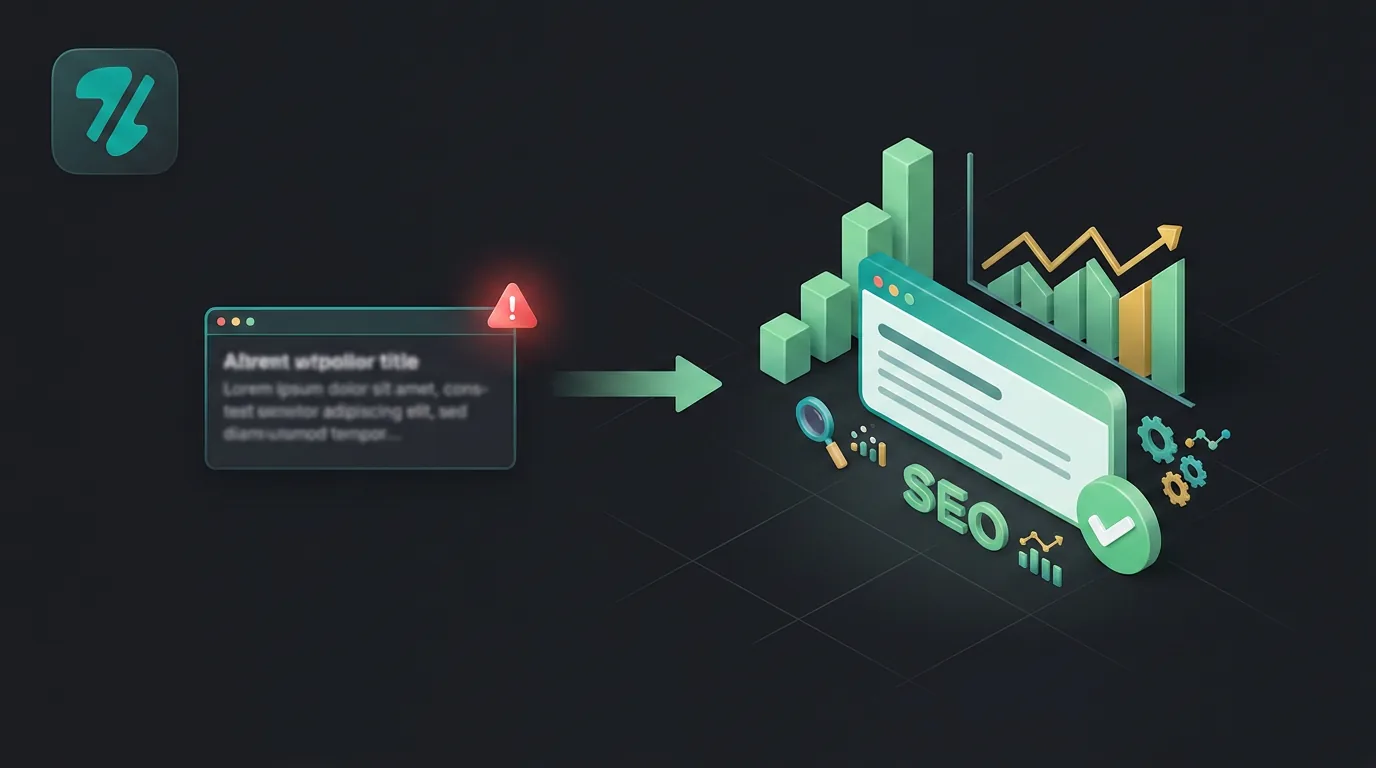
- An Etsy title rewrite is the process of restructuring a product's title and metadata after removing a trademarked term to recover search visibility.
- To execute an Etsy title rewrite, sellers must identify the core generic buyer intent, front-load the most relevant keyword phrase in the first 40 characters, and remove spammy separators.
- After rewriting an Etsy title, sellers must also update their 13 tags and listing attributes to match the new generic keywords, or the listing will struggle to rank.
- Changing an Etsy title resets its algorithmic history, meaning sellers should expect a 2 to 4 week dip in traffic while the search engine re-indexes the new keywords.
Why Removing Trademarks Tanks Your Etsy SEO
Explains the immediate algorithmic impact of deleting a high-volume branded keyword from your listing.
When you receive an intellectual property warning, or realize you are using a risky brand name, your first step is to delete the infringing term. While this is legally necessary to protect your shop from suspension, it often results in an immediate and devastating drop in traffic.
This drop happens because your listing was relying on the search volume of that trademarked term, like a specific movie character or a protected brand name. When you remove the core keyword that was driving impressions, Etsy's search algorithm suddenly loses the context of what your item actually is.
Furthermore, sellers often panic-edit their listings, leaving behind a disjointed string of adjectives or a keyword dump that humans refuse to click. To recover your visibility, you cannot just delete the bad word; you must execute a strategic Etsy title rewrite that targets safe, generic buyer intent.
Common SEO Mistakes After Trademark Removal
When panicked sellers remove a trademarked term, they often make these critical SEO errors that hurt their click-through rate.
Replacing the brand name with a robotic string of 15 unrelated adjectives that humans refuse to click.
Adding 'inspired by [Brand]' to the title, which is still a direct trademark infringement that bots will catch.
Changing the title but leaving the trademarked brand name hidden in the 13 listing tags or backend attributes.
Step 1: Identify the Generic Buyer Intent
How to pivot from a branded search to a descriptive, aesthetic-based search strategy.
The foundation of a successful Etsy title rewrite is replacing the branded term with the underlying reason a customer wants the product. You must identify the generic buyer intent. For example, if you remove a specific theme park brand from your title, you need to ask yourself what the buyer is actually looking for, such as a family vacation matching shirt or a magical castle trip outfit.
Instead of relying on a famous name to do the heavy lifting, focus on the product's aesthetic, recipient, occasion, and material. Buyers search for descriptive terms like retro pastel, gothic, bridesmaid gift, or minimalist.
Use keyword research tools to find high-volume, non-branded phrases that accurately describe your item. The goal is to find the intersection between what your product looks like and the generic terms shoppers are typing into the search bar.
Step 2: The Front-Loaded Etsy Title Rewrite
The mechanics of restructuring the title for maximum mobile visibility and algorithm matching.
Once you have your new generic keywords, it is time to restructure the title. Etsy's search algorithm, and human buyers on mobile devices, heavily prioritize the beginning of your listing title. If your strongest generic keyword is buried at the end of a 140-character string, your click-through rate will suffer.
Front-load your title by placing your most descriptive, high-intent keyword phrase in the first 40 characters. This ensures the core concept of your product is visible before the text truncates on a mobile screen.
Additionally, remove spammy separators like excessive pipes or commas. A title that reads naturally to a human will always convert better than a robotic list of tags. A clean, readable title signals to Etsy that your listing is high-quality and relevant to the search query.
The 10-Minute Etsy Title Rewrite Process
Follow this exact sequence to restructure your listing title for maximum mobile visibility and algorithm matching.
- Step 1: Find the Core Generic Identify the strongest non-branded search term (e.g., 'Family Theme Park Shirt' instead of 'Disney Shirt').
- Step 2: Front-Load the Hook Place your strongest generic keyword phrase in the first 40 characters of the title for mobile truncation.
- Step 3: Clean the Separators Remove excessive pipes and commas. Write the title so it reads naturally to a human buyer scanning results.
Step 3: Realigning Tags and Attributes
Why tags and backend attributes must match the new title to regain ranking.
An Etsy title rewrite is only half the battle. If you change your title but leave your 13 listing tags untouched, you are sending conflicting signals to the search algorithm. Even worse, if you leave the trademarked brand name hidden in your tags, you are still committing IP infringement and risk a sudden takedown.
You must realign your tags to match the new generic keywords you established in your title. Use all 13 tag slots to capture long-tail variations of your core phrase. If your new title focuses on boho nursery decor, your tags should include variations like neutral baby room, bohemian wall art, and earth tone nursery.
Do not forget to update your listing attributes. Etsy uses attributes like color, material, and occasion as implicit keywords to match your listing to buyer filters. Accurate attributes provide an extra layer of SEO visibility without taking up valuable space in your title.
Step 4: Surviving the Algorithmic SEO Dip
Managing expectations and understanding the re-indexing timeline after a major SEO edit.
Sellers often panic when their traffic does not immediately return after a title rewrite. It is critical to understand that changing a listing's title and tags resets its algorithmic history for those specific terms. You are essentially introducing the listing to a brand new set of search queries.
Expect a temporary dip in visibility lasting anywhere from two to four weeks. During this time, Etsy's search engine is testing your listing against the new generic keywords to see how buyers respond. Your click-through rate may fluctuate as the system figures out where your product belongs in the ranking hierarchy.
The biggest mistake sellers make during this phase is editing the title again after only a few days. You must give the algorithm time to re-index your changes. Monitor the data over a full month before deciding if further tweaks are necessary.
What to Expect During SEO Recovery
Changing a listing title resets its algorithmic history. Here is the typical timeline for an Etsy SEO recovery.
Step 5: The Pre-Publish IP Clearance
Ensuring the new generic terms aren't actually trademarked before hitting publish.
The final step in the Etsy title rewrite workflow is ensuring you do not accidentally replace one trademark with another. Many seemingly generic terms, such as Onesie, Shabby Chic, or Teflon, are actually registered trademarks. Using them as descriptive keywords can trigger the exact same IP strikes you were trying to avoid.
Before you hit publish on your newly optimized listing, you must audit your new keywords. Check the USPTO database or use a dedicated compliance tool like [ZenStorefront's automated IP scanning](/) to verify that your chosen phrases are safe for commercial use in your specific product category.
By integrating a pre-publish IP clearance check into your workflow, you can confidently optimize your listings for maximum traffic without the constant fear of automated takedowns. Always remember that this guide is for educational purposes; sellers should consult a qualified attorney for specific legal decisions regarding their business.
Audit Your New Titles Before Publishing
Don't accidentally replace one trademark with another. Scan your rewritten titles, tags, and descriptions for hidden IP risks.
Frequently asked questions
How long does it take for Etsy SEO to recover after a title rewrite?
Changing an Etsy title resets its algorithmic history. It typically takes two to four weeks for the search engine to fully re-index the new generic keywords and for your traffic to stabilize.
Should I change all my Etsy listing titles at once?
No. If your listings are currently performing well and do not contain trademark infringements, you should leave them alone. Only execute an Etsy title rewrite on listings that require IP cleanup or are severely underperforming.
Does changing an Etsy title affect my listing tags?
Changing your title does not automatically change your tags, but you must manually update your 13 tags to match your new title keywords. If your title and tags do not align, your listing will struggle to rank in search results.
Can I use the phrase 'inspired by' in my Etsy title?
No. Using the phrase 'inspired by' followed by a trademarked brand name in your Etsy title is still considered trademark infringement and can result in a listing takedown or shop suspension.
Protect Your SEO with Automated IP Scanning
Don't guess which keywords are safe. [Connect your shop](/settings#store) to ZenStorefront to automatically scan your Etsy titles, tags, and descriptions for hidden trademarks before you publish. Protect your shop from takedowns while optimizing for the traffic you deserve.
Start a free scan