
Quick answer
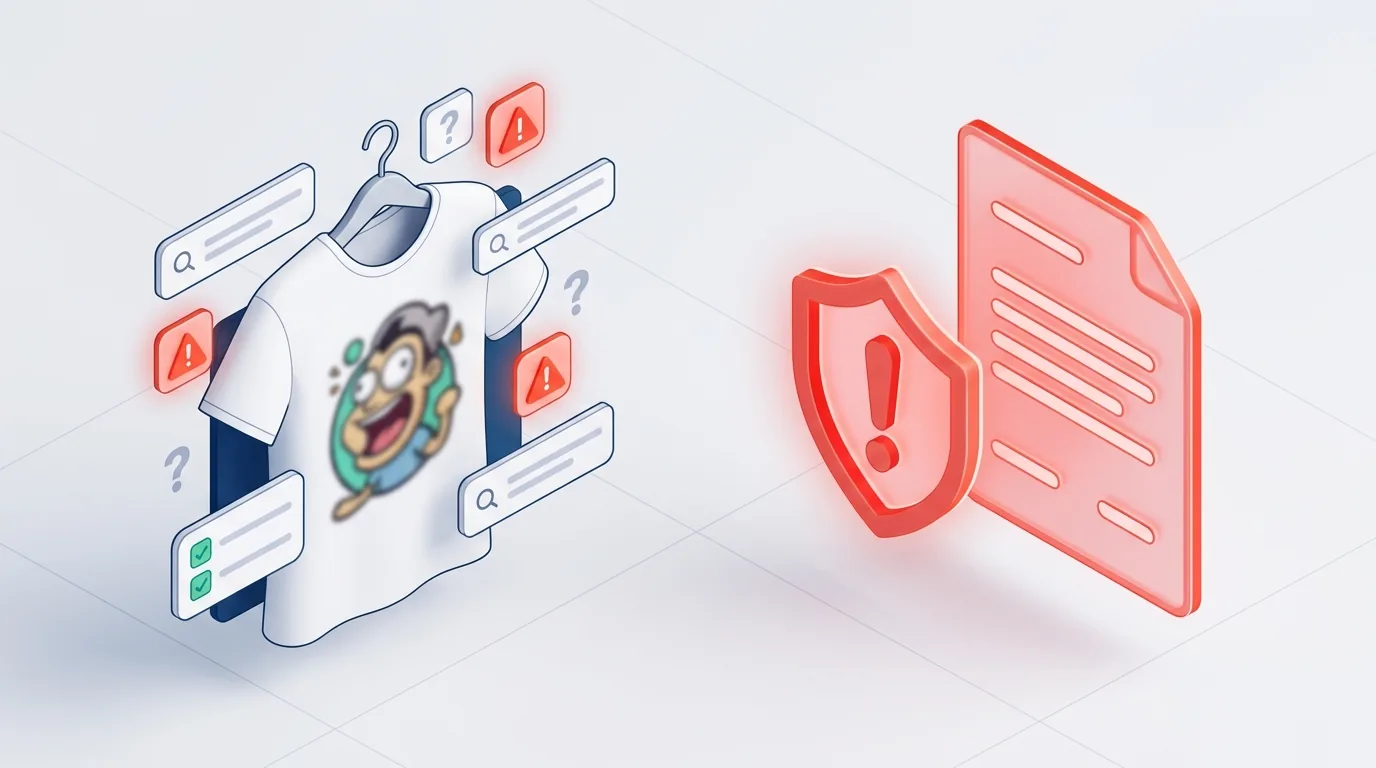
- Selling parody items on Etsy is highly risky because while parody can be a defense against copyright infringement, it does not protect sellers from trademark infringement.
- Even if a design qualifies as a legal parody, using the original brand's trademarked name in Etsy tags or titles to attract buyers will trigger an automated trademark takedown.
- Etsy sellers cannot use disclaimers like 'inspired by' or 'parody' to avoid intellectual property strikes from major brands.
The Difference Between Copyright Parody and Trademark
Sellers often confuse copyright fair use with trademark law, leading to unexpected listing deactivations.
If you are wondering about selling parody items on Etsy, the short answer is that it is incredibly risky. Many sellers mistakenly believe that labeling a product as a 'parody' or 'satire' automatically protects them under the Fair Use Doctrine. However, this is a dangerous legal myth.
Many sellers confuse copyright and trademark when defending their parody designs. Copyright protects the actual creative work—like a movie, a drawing, or a song. Under copyright law, parody can sometimes be considered 'fair use' if it transforms the original work to comment on or criticize it.
However, trademark law protects brand identifiers, such as names, logos, and slogans. This is where Etsy sellers get caught. You might draw a hilarious, highly transformative caricature of a famous cartoon character that qualifies as a copyright parody. But the moment you print that character on a commercial product and sell it, you cross into dangerous territory.
Trademark owners are legally required to protect their brand identity from consumer confusion and dilution. If a brand believes your parody t-shirt is profiting off their reputation or confusing buyers, they will issue a takedown notice. On Etsy, trademark strikes are far more common than copyright strikes.
Copyright vs. Trademark in Parody
Why "Parody" Won't Stop an Etsy Bot Sweep
Automated trademark sweeps target the tags and titles used to sell the item, not the comedic nuance of the artwork.
The biggest flaw in the Etsy parody business model isn't the artwork itself—it is how buyers find the artwork. To sell a parody of a famous television show, you have to use the show's name in your Etsy tags, titles, or descriptions so fans can search for it.
Using a trademarked term to sell an unauthorized product is trademark infringement, regardless of what the actual item looks like. Major brands and their legal agencies do not manually browse Etsy looking for nuanced comedic art. They use automated software to sweep the marketplace for their trademarked keywords.
When a bot finds your listing using a protected brand name in the tags, it issues an automated takedown notice. The bot does not care that your design is a joke, and Etsy's legal team will not evaluate the comedic merit of your listing. They will simply deactivate the item and issue a strike against your shop.

The Supreme Court's Stance on Commercial Parody
Recent legal rulings have proven that selling a commercial parody product is not automatically protected by free speech.
If you think you can fight a trademark strike by claiming First Amendment free speech, recent legal precedents suggest otherwise. In a landmark 2023 case involving a parody dog toy that mocked a famous whiskey brand, the Supreme Court ruled against the parody creator.
The court determined that when a parody is used as a trademark to sell a commercial product, it is not automatically shielded by the First Amendment. If the parody product has the potential to confuse consumers or dilute the original brand's value, the trademark owner has the right to enforce their intellectual property.
For Etsy sellers, this ruling reinforces a harsh reality: commercializing a parody is not a protected free-for-all. Selling a physical product for profit is viewed very differently by the courts than a comedian making a joke on television or a journalist writing a satirical article.
Common Parody Mistakes That Trigger Takedowns
Sellers often try to use clever workarounds to avoid IP strikes, but these tactics rarely hold up.
Sellers often try to use clever workarounds to avoid IP strikes, but these tactics rarely hold up. The most common mistake is adding disclaimers to the listing title. Disclaimers do not negate trademark infringement; in fact, they often serve as an admission that you are using another company's intellectual property.
Another frequent error is mashing up two protected properties. Instead of being twice as funny, this makes your listing twice as risky, as you are now exposed to sweeps from two different corporate legal teams.
Finally, many sellers mistakenly use a brand's exact proprietary font or logo silhouette to deliver their joke. Even if the words are different, replicating a highly recognizable logo structure can still constitute trade dress infringement, leading to swift listing deactivation.
- Using 'inspired by' or 'parody' in titles does not provide legal immunity.
- Mashing up multiple pop culture characters multiplies your exposure to takedowns.
- Copying a brand's specific font or logo silhouette violates trade dress protections.
Parody Workarounds That Don't Work
Adding 'Parody' or 'Inspired By' to your title does not protect you from trademark strikes.
Combining two different pop culture characters just doubles your risk of a takedown.
Putting a brand name in your hidden tags still triggers automated bot sweeps.
How to Safely Sell Humor on Etsy Without IP Strikes
The best way to sell humorous items is to rely on generic concepts and proactively scan your shop for hidden risks.
If you want to sell humorous or satirical items on Etsy, the safest approach is to rely on generic concepts rather than specific intellectual property. Instead of parodying a specific sci-fi movie franchise, create jokes about space travel, generic aliens, or science tropes.
If you do create a design that nods to pop culture, you must strictly avoid using any trademarked names, character names, or studio names in your titles, tags, and descriptions. This makes marketing the item much harder, but it is the only way to avoid automated trademark sweeps.
To ensure your shop remains compliant, use a proactive scanning tool. ZenStorefront's image lab can analyze your graphics for protected visual elements, while our tag scanner catches high-risk keywords before the brand bots do. By catching these issues early, you can protect your seller account from devastating suspensions.
Scan Your Shop for Hidden Trademark Risks
Don't let a misunderstood parody design cost you your Etsy shop. ZenStorefront scans your listings for trademarked tags and high-risk visual IP.
Frequently asked questions
Can I use a brand's name in my Etsy tags if my item is a parody?
No. Using a trademarked brand name in your Etsy tags, titles, or descriptions to sell a commercial product is trademark infringement, even if the artwork itself is a parody.
Does adding 'inspired by' or 'parody' to my title protect my listing?
No. Legal disclaimers like 'inspired by' or 'parody' do not protect you from intellectual property takedowns. In many cases, they act as an admission that you are using another brand's IP.
Why do other Etsy shops get away with selling parody items?
Many shops selling infringing parody items simply haven't been caught yet by automated bot sweeps. Etsy processes takedowns as they are reported by the intellectual property owners, meaning enforcement is not always simultaneous.
Stop Guessing About Parody Risks
Don't let a misunderstood joke cost you your Etsy business. Connect your shop to ZenStorefront today to automatically scan your listings for hidden trademarked tags and high-risk visual IP before you get a strike.
Start a free scanSources reviewed
- Fan Art and Fair Use: One Truth and Five Myths - Official Etsy policy explanation regarding fair use, parody, and fan art.
- Jack Daniel's Properties, Inc. v. VIP Products LLC - Legal precedent demonstrating that commercial parody products are not automatically protected from trademark infringement.